What Is SAP Ariba? A Practical Guide for Mid-Size Businesses
Understand what SAP Ariba is, its core modules, how it connects to your ERP, and what mid-size businesses should consider before implementing it.
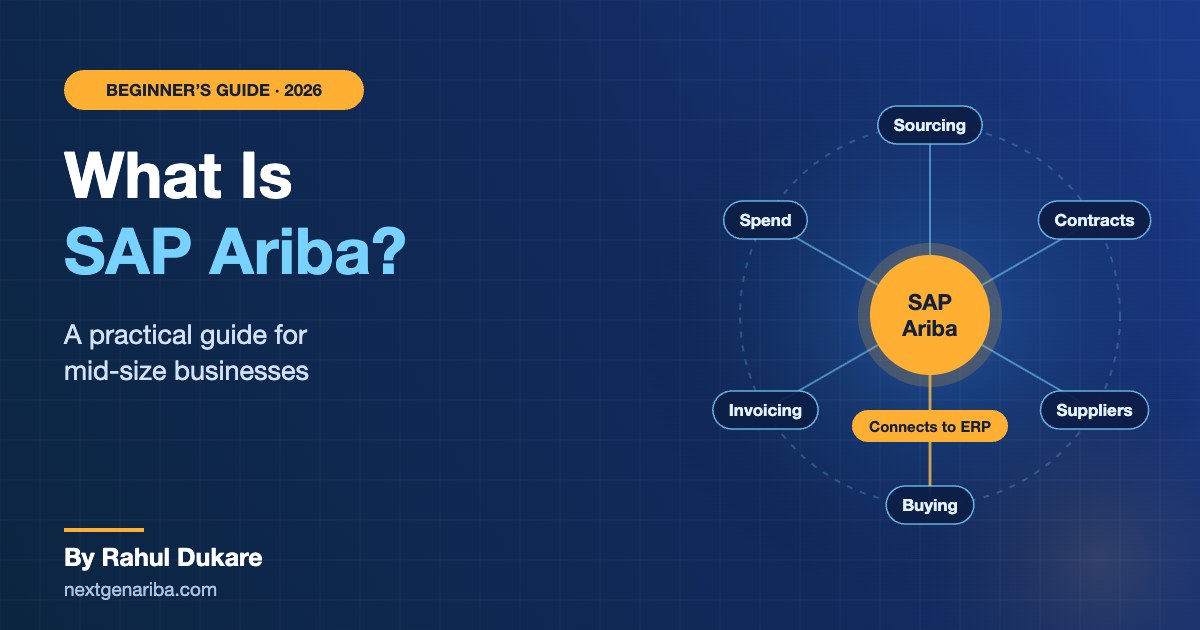
SAP Ariba is SAP's cloud-based procurement platform. It brings sourcing, contracts, supplier management, purchasing and invoicing into one connected system — and links your business to suppliers through SAP Business Network. For mid-size businesses, it can replace spreadsheets, emails and disconnected tools with a single, controlled source-to-pay process.
The core SAP Ariba modules
SAP Ariba is modular, so you can start with the areas that matter most and expand later:
- SAP Ariba Sourcing — run RFQs, RFPs and auctions, and compare supplier bids side by side.
- SAP Ariba Contracts — author, approve and store contracts in one place.
- SAP Ariba Supplier Lifecycle and Performance — register, qualify and evaluate suppliers.
- SAP Ariba Buying and Invoicing — guided buying, catalogs, purchase orders and invoice processing.
- SAP Business Network — the network where you and your suppliers exchange orders, confirmations and invoices electronically.
How SAP Ariba works with your ERP
SAP Ariba handles the procurement process, while your ERP (such as SAP S/4HANA) remains the system of record for finance and inventory. The two are integrated so that master data, purchase orders, goods receipts and invoices flow between them. Getting this integration right is one of the most important parts of any Ariba project.
Is SAP Ariba right for a mid-size business?
SAP Ariba is often associated with large enterprises, but mid-size companies can benefit just as much — especially when they:
- are growing quickly and need stronger spend control,
- work with a large or changing supplier base,
- already run SAP ERP and want procurement to match, or
- need better compliance and audit trails for purchasing.
The key is to scope the project sensibly: start with the modules that solve your biggest problems, and phase the rest.
Before you start: five questions to answer
- Which procurement problems are costing you the most today?
- Which modules address those problems first?
- Which ERP will SAP Ariba integrate with, and who owns that integration?
- How will you onboard suppliers to SAP Business Network?
- Who will support the system after go-live?
Next steps
If you are evaluating SAP Ariba or planning an implementation, our team can help you build a clear, realistic roadmap. Get in touch or explore our SAP Ariba implementation services.
Related reading: Curious where SAP Ariba is heading next? Read Next-Gen SAP Ariba & Joule AI Agents: What Procurement Teams Need to Know in 2026.